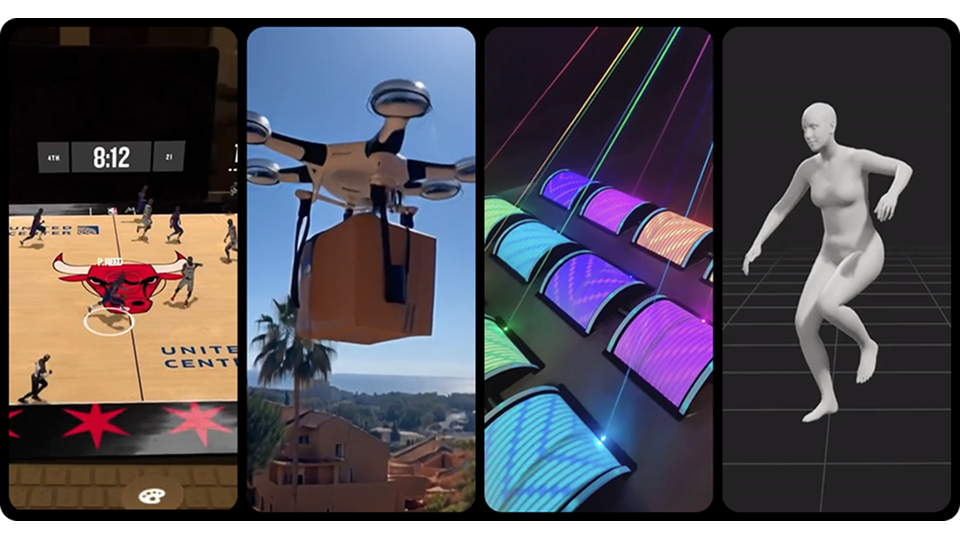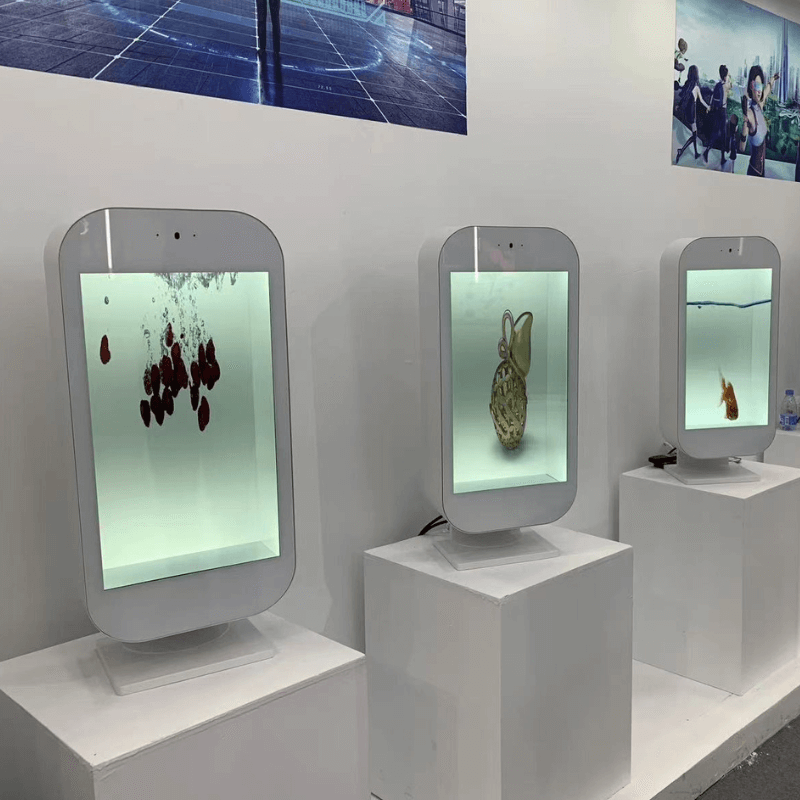
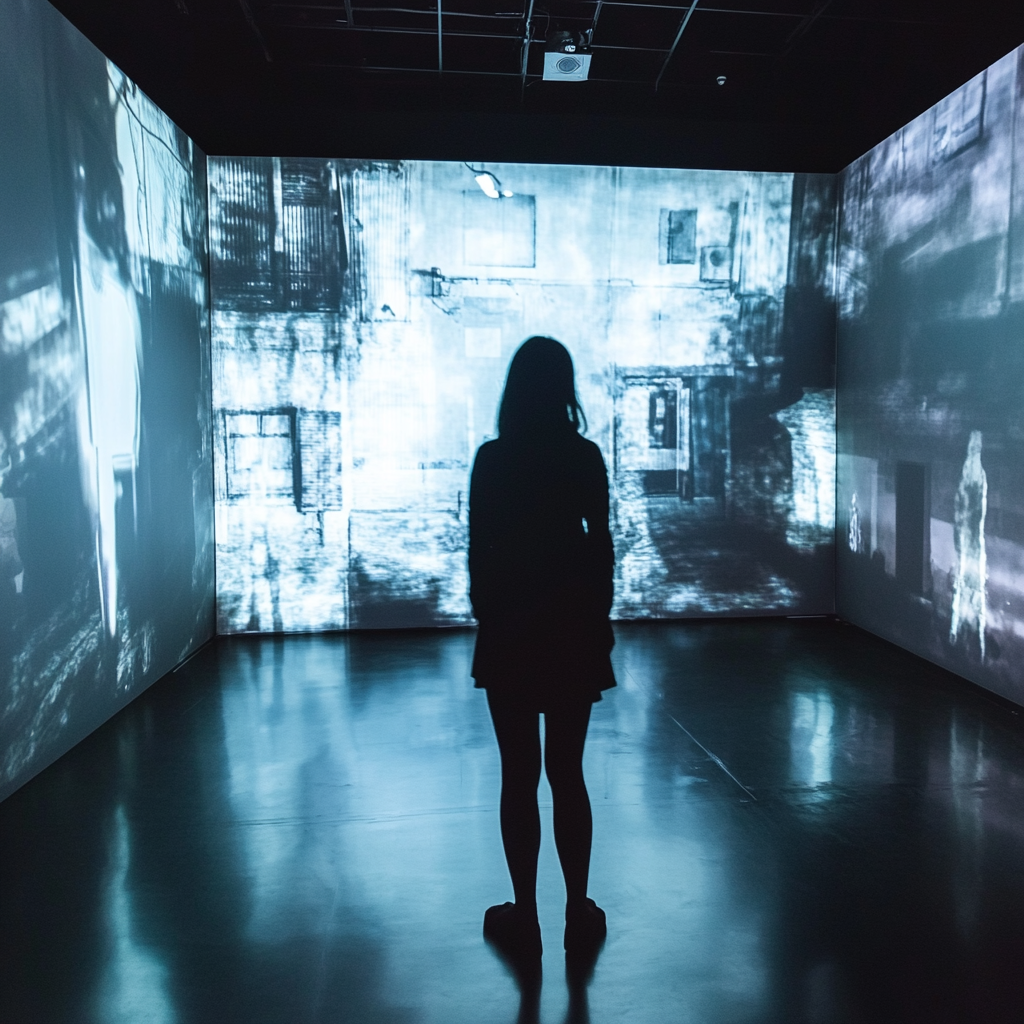
A year-end recap is mostly an excuse to read your own work back and see what it adds up to. 2024, for us, added up to a run of partnerships that pushed harder on the experiential brief than anything we'd shipped before. Cathay Pacific in two London theatres. Heineken on a crowd-gaming dancefloor. A DeLorean rebuilt in AR. Seat Unique in VR. Living Canvas, still painting itself with the weather.
A look back at the work that defined our 2024
Cathay Pacific, a multi-touchpoint partnership
One of our most active partnerships in 2024 was with Cathay Pacific, working alongside Prodigious to build immersive brand moments across multiple London touchpoints. At the Gillian Lynne Theatre, we turned a functional escalator into a cinematic journey through the airline's network. Eight portrait 4K LED screens carried aerial sequences over Hong Kong, Sydney and beyond, holding Cathay's premium identity at every step of the climb.
The collaboration extended to the Cathay Pacific Lounge Experience at the London Palladium, where the same digital storytelling moved into a VIP setting. Two very different rooms, the same brand, one continuous thread of work.
Heineken Refresh Takeover, music and crowd gaming
The Heineken Refresh Takeover was a music-led crowd gaming experience built for a live audience to play together. Dynamic visuals tied to the room, gamification tied to the brand, and a feedback loop fast enough that people kept reaching for it. The kind of activation where the crowd is half the content.
Epsilon at MAD//Fest, AR meets automotive heritage
At MAD//Fest 2024 we put a DeLorean on the floor and let people redesign it in AR. Working with Epsilon, attendees personalised the car's aesthetic and saw the result render onto the real vehicle in front of them. Nostalgia is easy. Nostalgia plus interactivity, where the audience leaves having made something, is a more durable memory of the brand.
Seat Unique, VR and LED for fan engagement
Our work with Seat Unique spanned a large-scale LED wall installation and a VR sales tool, both pointed at the same problem: how do you sell a premium seat to someone who hasn't sat in it yet. The VR tool put buyers inside the venue before purchase. The LED work made the brand feel native to the venues themselves. Two ends of the same funnel, built as one piece of work.
Living Canvas, a digital artwork that evolves in real time
2024 was also a year of Living Canvas, our self-evolving digital artwork that responds to live weather data. Built in WebGL and driven by environmental inputs, it's a piece that paints itself differently every time you look at it. A useful proof for us of what happens when data visualisation, generative design and immersive storytelling are treated as one discipline.
AI, real-time content and the marketplace
AI moved from sidebar to backbone this year. We integrated it into pre-visualisation, storyboarding and rapid prototyping, which meant faster turns on creative without thinning out what got made. Our toolkit ran wider than the obvious names. ComfyUI, ControlNet and Stable Diffusion sat alongside Runway and Krea.AI, with Google Veo 2 joining the experiments late in the year.
The bigger shift was in interactive storytelling. AI lets a narrative respond to who's in front of it, not just play out the same way for everyone, and that's a different kind of brief than the one we were writing this time last year. Real-time rendering and 3D production sit on the same arc. Still early, but the asset pipeline is getting cheaper and faster fast enough that you can feel it changing what's quotable.
The widening role of AR, VR and wearables
Our AR, VR and mixed-reality work kept widening. 2024 was a strong year for wearables and spatial computing, and the briefs reflected it. Hybrid physical-digital activations, where the AR layer and the room are designed together rather than one stuck on top of the other, became the default rather than the exception.
WebGL stayed central too. Browser-based interactive content, when you blend it with AI, Web3 frameworks and reactive audio-visual systems, is doing things we wouldn't have considered shippable two years ago. That's where a lot of our R&D time went.
Looking ahead
What we're carrying into 2025: real-time AI in live activations, higher-resolution LED and projection work, deeper AR and Web3 crossovers, AI-driven 3D pipelines, and more ambitious WebGL pieces in the browser. A 2025 guide is on the way. Until then, if you're working on something that wants to live in any of those territories, get in touch.