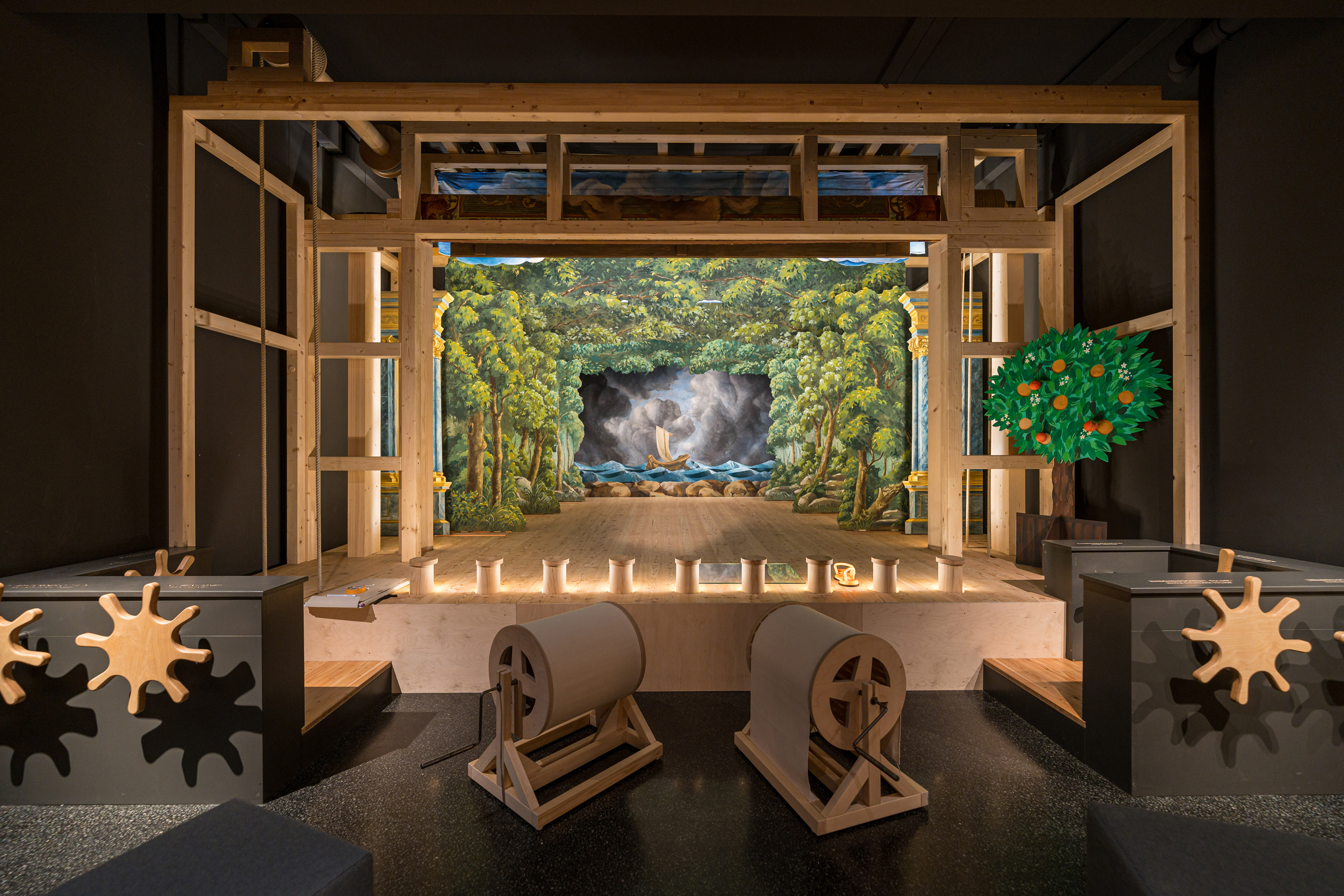
A video of 18th-century stagecraft mechanics went viral recently, showing wooden waves moved by hand-cranked levers. It’s a useful anchor for event commissioners planning for 2026, because it points to an increasing fatigue with glass screens and a renewed interest in tangible interfaces that have weight and physical presence.
For the last fifteen years, the primary interface for almost every digital experience has been the flat glass screen. We tap, swipe, and pinch. While efficient, the interaction model is uniform and lacks the satisfying tactile feedback of physical objects. Every app, website, and digital kiosk feels fundamentally the same because the muscle memory required is identical. This uniformity makes the experiences themselves feel interchangeable, creating a significant challenge for brands who need their activations to stand out.
What is a tangible interface?
A tangible interface is a system that uses physical objects as controls for a digital experience. Instead of a touchscreen, users interact with real-world objects like levers, dials, or custom-built controls to manipulate what happens on a screen or in an environment. This approach is rooted in embodied cognition, the idea that our physical engagement with objects deepens understanding and memory, creating satisfying feedback that glass screens cannot replicate.
Why physical interaction works.
Think of the enduring appeal of an arcade game. The heavy joystick, the chunky buttons. Each action has weight and consequence. When a user pulls a lever to reveal content on a screen, they are not just a passive viewer; they are an active participant. This small shift in agency is what makes the experience stick. The novelty of large touchscreens has worn off; they are now just bigger versions of the phone in our pocket. The work that cuts through offers a different kind of engagement.
Blending old mechanics with new technology.
The point is not to abandon digital technology, but to augment it with the proven appeal of the physical. The most interesting briefs we see are those that fuse rugged, satisfying mechanical inputs with sophisticated digital outputs. This could be a ship's wheel that navigates a 3D environment on a projection-mapped wall, or a series of physical dials that adjust the colour and mood of an immersive lighting installation.
We explored this by building a physical code-breaking machine for the Nike x Nocta launch, where a rugged, analogue interface controlled a digital screen. The weight of the controls and the satisfying clunk of the mechanism made the experience more memorable than a simple touchscreen puzzle would have been. It grounded the digital reveal in a shared, physical moment.
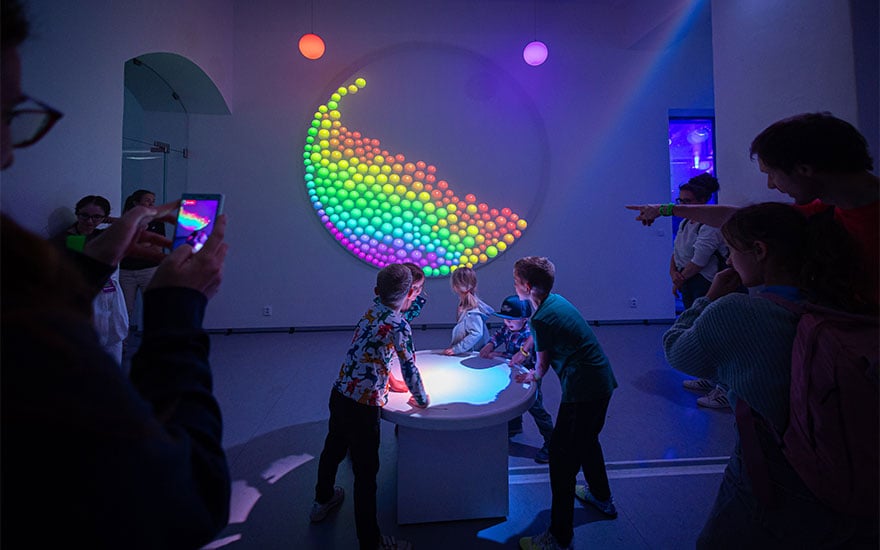
This approach allows for a much wider creative canvas. Instead of being limited to a library of on-screen UI elements, we can design unique physical interfaces specific to the brand and the story being told. A luxury car brand might use a weighted metal dial that mimics the feel of their vehicle's controls. A children's museum could use large, colourful blocks that trigger animated stories when placed in a certain order. This is how brands build installations that feel unique to their world.
What this means for commissioners.
As we plan for 2027, the conversation needs to move past screen size and resolution. The more useful question is: what does the interaction feel like? The novelty of purely digital spectacle has a ceiling. The real opportunity for memorable brand experiences lies in this blend of the tangible and the digital, using physical interfaces to ground the work in a way an audience remembers.
Get in touch if you are trying to build an experience with tangible interfaces and want to talk through how to make it land.