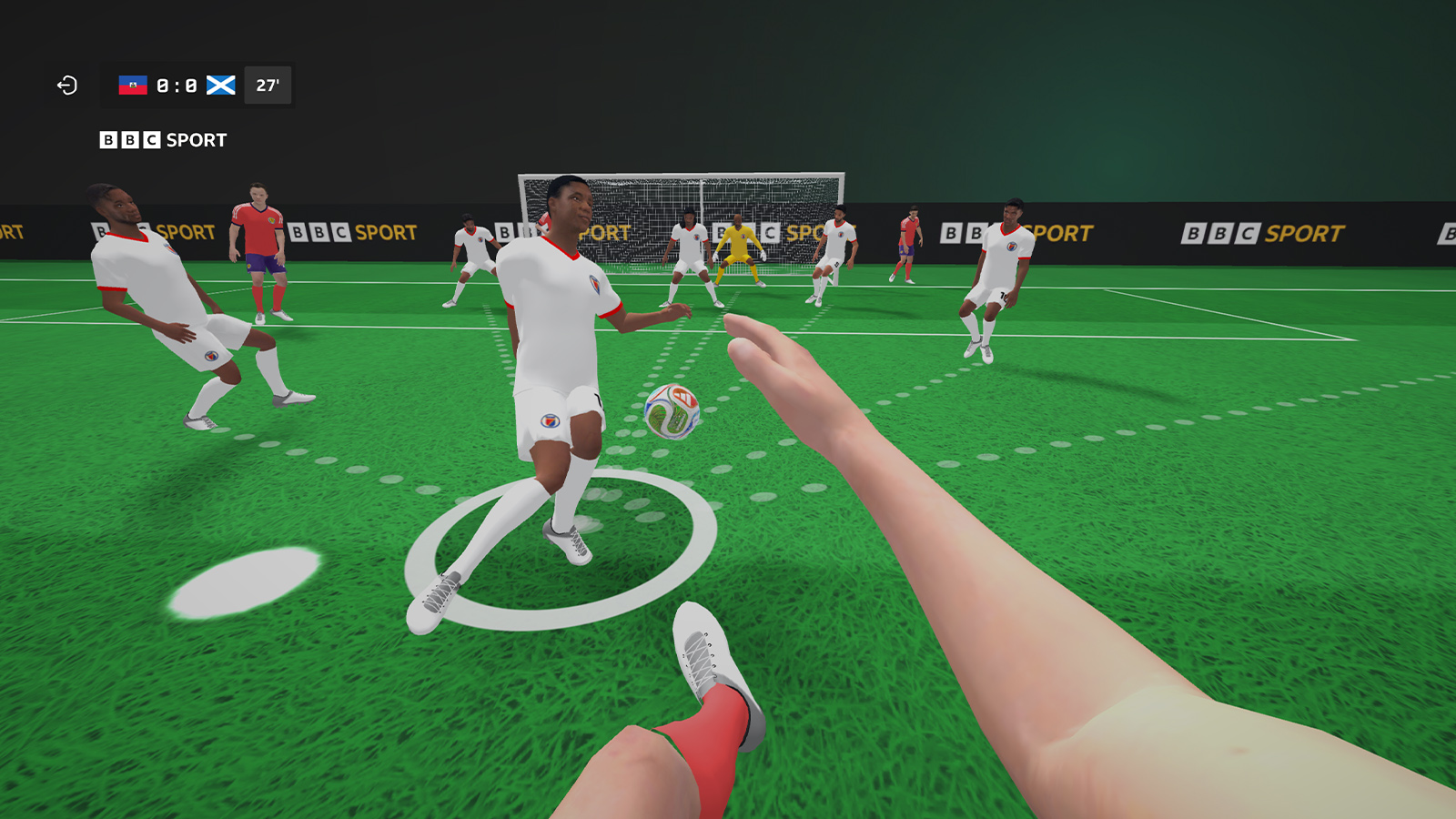
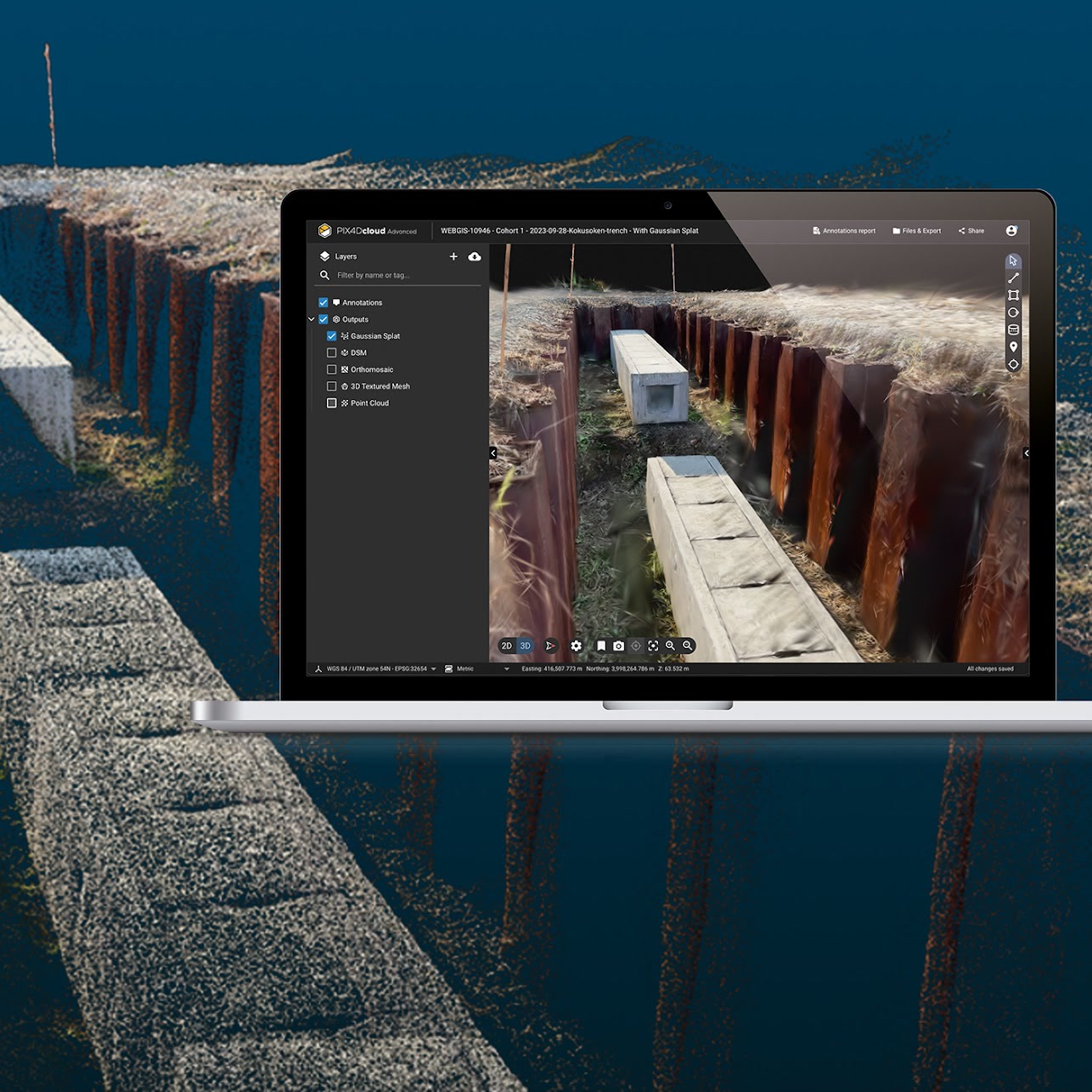
Gaussian splats have been all over our feeds in October 2026. Blender's next release opens them natively, and designers are stringing them into worlds you walk between through portals. Here is what a splat actually is, and where we think it earns a place in a brand brief.
What is a Gaussian splat?
A Gaussian splat is a 3D capture of a real place or object made from millions of small, soft, semi-transparent blobs of colour, instead of the polygons a game engine normally draws. Stack enough of them and you get something that looks like a photograph you can walk around inside.
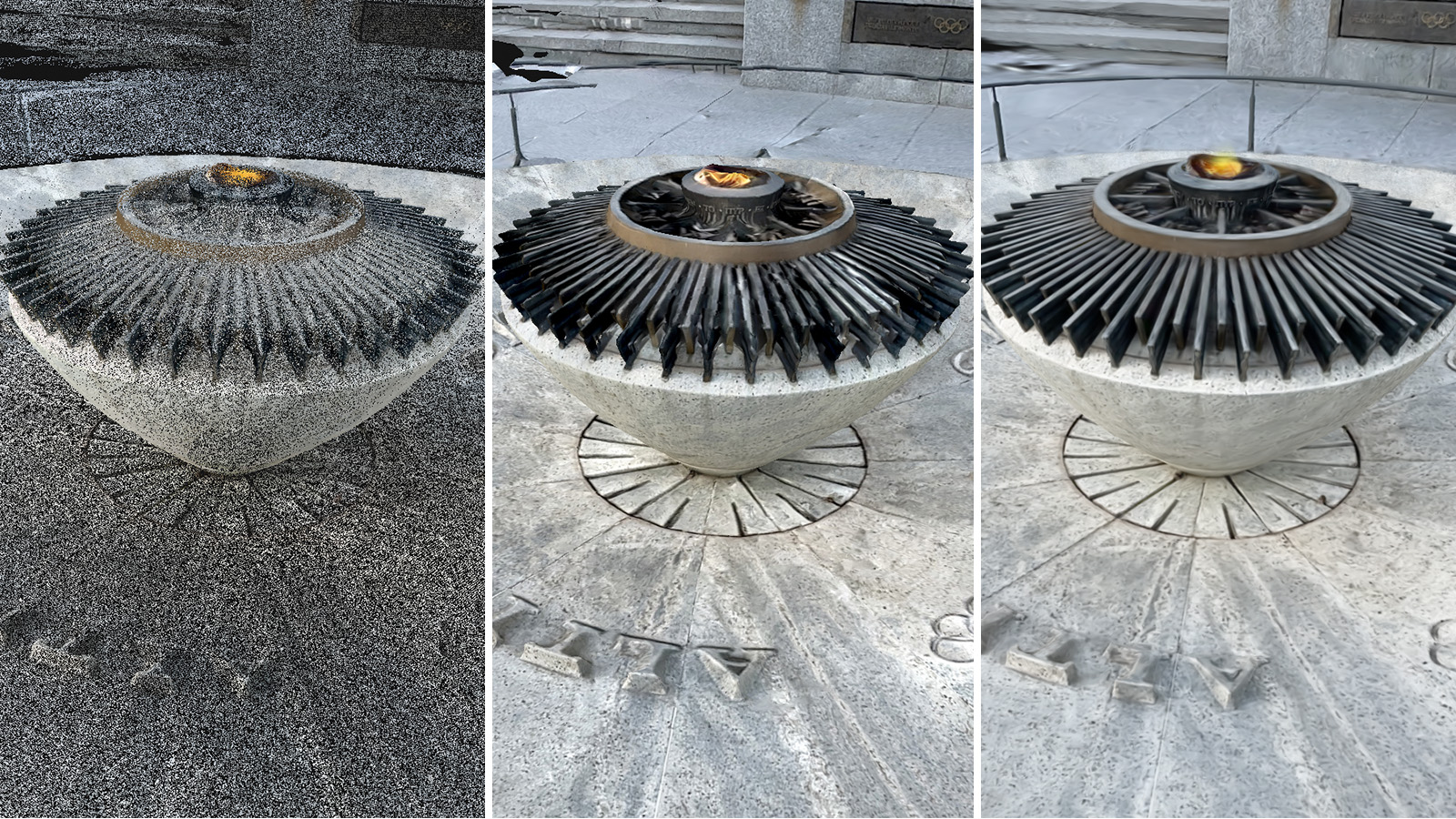
The method comes from a 2023 SIGGRAPH paper by Bernhard Kerbl, Georgios Kopanas, Thomas Leimkühler and George Drettakis at Inria. You give the software photos or video of a scene and it adjusts the blobs until they match the pictures. The paper reported real-time rendering at 1080p, at 100 frames a second or more, which is why splats left the lab so quickly.
Splats handle what polygon scans have always struggled with: foliage, hair, fabric and the general clutter of a real room.
Why splats are suddenly everywhere
Capture got easy first. Niantic's free Scaniverse app trains a splat on the phone itself from a minute or two of walking round a subject, with nothing uploaded. One of the month's top posts on Reddit's r/GaussianSplatting was a whole street rebuilt from a Tesla's built-in cameras. What lagged was editing, since splats lived in their own viewers and plug-ins.
This month's Blender news closes that gap. Per the release notes, as reported by Radiance Fields and Digital Production, Blender 5.3 stores splats as a native point cloud type, imports PLY and SPZ files and renders them in EEVEE and Cycles. It is still in test builds, with release expected on 10 November, and it can't export splats yet. Even so, a free tool most studios already use now treats a scanned place as ordinary scene material.
Where splats fit a brand brief
Venue previews are the obvious start. Scan a hall or an empty retail unit on the recce and the whole team, client included, can walk it from a laptop afterwards. It won't replace a measured survey, but it settles a lot of "where does the queue go" conversations before anyone books a flight.
Heritage is a close second. When Covid shut the Marble Arch Caves, we made a 360 film and VR tour with BBDO Dublin for Tourism Northern Ireland and lit each chamber to show depth and texture in the dark. That was filmed, not splatted. A splat today would let visitors move between viewpoints, though a pitch-black cave is exactly where capture struggles, so we'd still be bringing the lights.
Then there are portals. The clip at the top of this post starts with a real alley captured as a splat, then opens a doorway into a generated version of the same street, overgrown and soaked in night-time rain. You step between them in a browser. It answers a brief we hear a lot: show this place as it is, and as it could be. That might be a regeneration site, a flagship before the fit-out or a stadium tunnel on matchday.
Turn the idea inside out and a monitor can show a splat of the room behind it, drawn from the viewer's tracked eye position, so the screen reads as glass. We'd happily put that in a shop window.
What splats still can't do
A splat bakes in the light from the day it was captured. Relighting it is hard, and Blender's relighting option is described as early. Mirrors, glass, water and anything that moved during the scan come out badly. A splat also has no solid surfaces, so a playable version of a real place needs a separate collision layer built alongside it, which Olli Huttunen's explainer on splat collision covers well.
Detailed splats get heavy, so phone and web builds need level-of-detail streaming planned in from day one. And scanning a venue or a crowd raises the same rights questions as filming it, so get permissions sorted before anyone presses record.
Our guess is that splats become a normal production format over the next year, much as 360 video did. The capture is now the cheap part. Deciding what people do once they are inside is still where the work is.
If there's a place you want people to step inside, tell us about it and we'll give you a straight answer on whether a splat is the right tool.