The BBC’s new 3D World Cup app is more than a novel way to watch a football match; it’s a clear signal of where the fan experience is heading. For briefs focused on sports activations in 2026, it’s a working prototype of the exact kind of real-time, data-driven experiences that are now possible. The technology to give fans genuine control has arrived.
From passive viewing to active analysis.
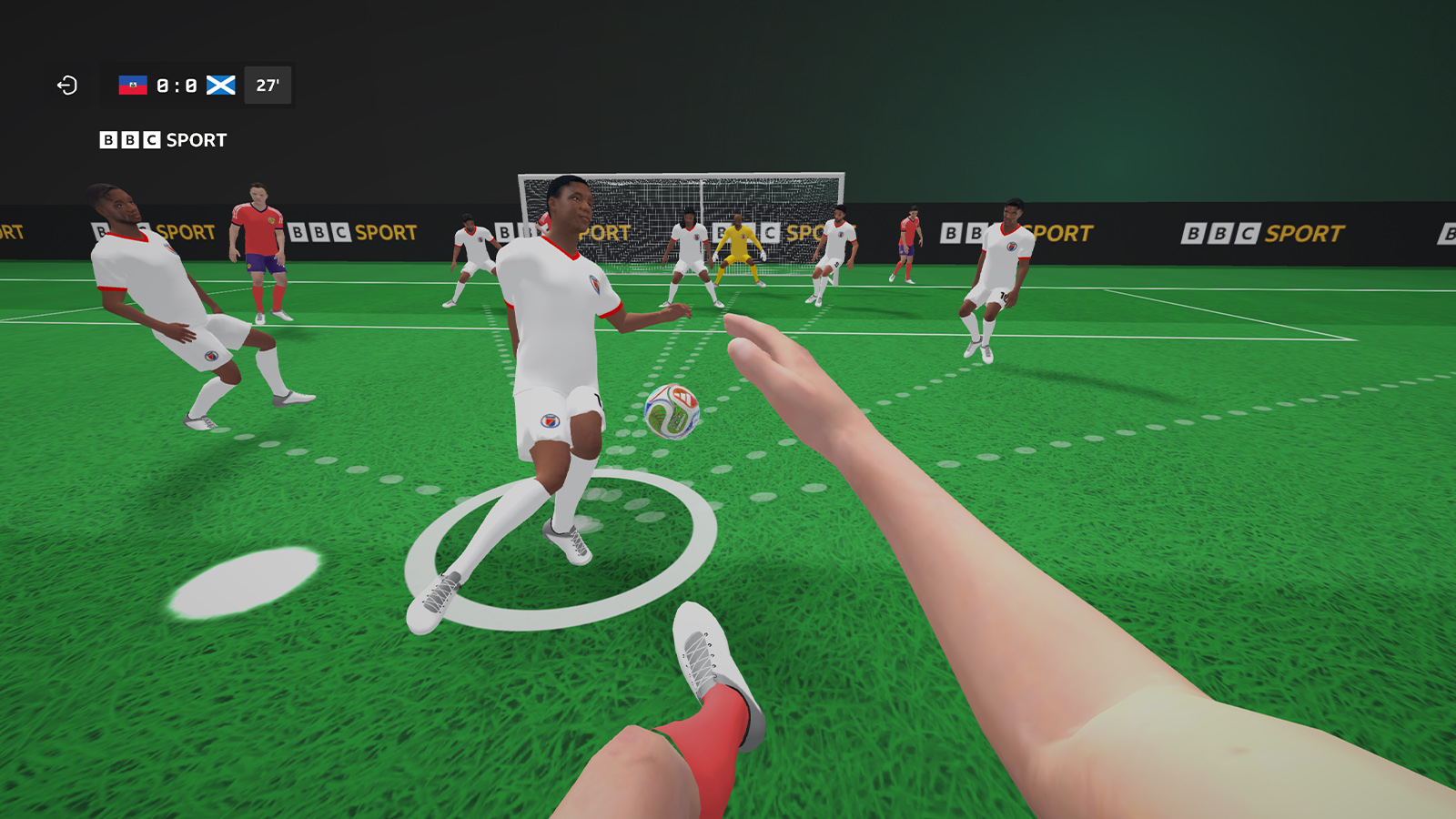
For decades, broadcast sport has been a fixed, curated experience. The director chooses the angle, the commentator provides the narrative. The BBC’s beta, powered by Immersiv.io, changes this by treating the match not as a single video feed, but as a live 3D environment. Using the same official FIFA skeletal tracking data that drives semi-automated offside calls, the app reconstructs player positions and movements in real-time. This allows viewers to switch from a standard broadcast view to a tactical bird’s-eye view, or even follow a specific player in a third-person perspective.
This creates a fundamental shift in audience engagement, enabling what can be defined as an interactive, data-driven sports experience. An interactive, data-driven sports experience is a system where the viewer can control their own perspective, rewind key moments from multiple angles, and access layers of statistics overlaid on the live action. It’s a model that moves the fan from being a passive recipient of a feed to an active analyst of the game, creating the kind of utility that sponsors have been trying to attach their names to for years.
The brief has already changed.
The arrival of a public-facing tool like this from a major broadcaster is significant because it validates a trend we've seen accelerating in client briefs. Brands involved in sports sponsorship are no longer asking for simple digital ad campaigns. They are asking for tools and experiences that give fans a genuinely new way to engage with the sport they love. From our own work, we've seen briefs from automotive and tech brands asking how they can use real-time data to create second-screen experiences that offer genuine value.
What we like about this model is its directness. It offers a clear value exchange: the brand provides a richer, more insightful viewing tool, and in return, it earns sustained, focused attention from the most engaged fans. The core idea is to move beyond awareness and towards tangible utility. Instead of just showing a logo, a brand can sponsor a specific data layer within an app like this, for example, owning the "player-speed" statistic or the "passing accuracy" overlay. This creates a much deeper connection than a simple media buy, turning a sponsorship from a cost into a feature. The BBC’s app proves to stakeholders that this is not a far-future concept; the data pipelines and rendering technology are stable enough for a global audience today.
The value beyond the second screen.
While the immediate application is a second-screen experience on a phone or tablet, the implications are much wider. The same data stream could power augmented reality experiences in-stadium, allowing fans to hold up their device and see tactical overlays on the actual pitch. It could feed interactive installations in fan zones, letting people explore key plays on a large touchscreen. For a brand, this presents an opportunity to own a piece of the live experience itself. It's a strategy we developed for our work with UEFA’s Ultimate Knockout experience, creating activations that put fans into the heart of the action rather than leaving them as spectators.
For us, the real value here is in the pipeline itself. The ability to take live, high-frequency data from a physical event and render it as a navigable, interactive digital twin is the foundational technology for the next decade of brand experiences. What the BBC has done for football is a pattern that can be applied to music festivals, product launches, and retail environments. The lesson from the BBC’s 2026 experiment is that the line between broadcast, gaming, and live events is becoming increasingly blurred.
Get in touch if your next brief involves giving fans a new lens on the game.