Learning design inside a spatial format
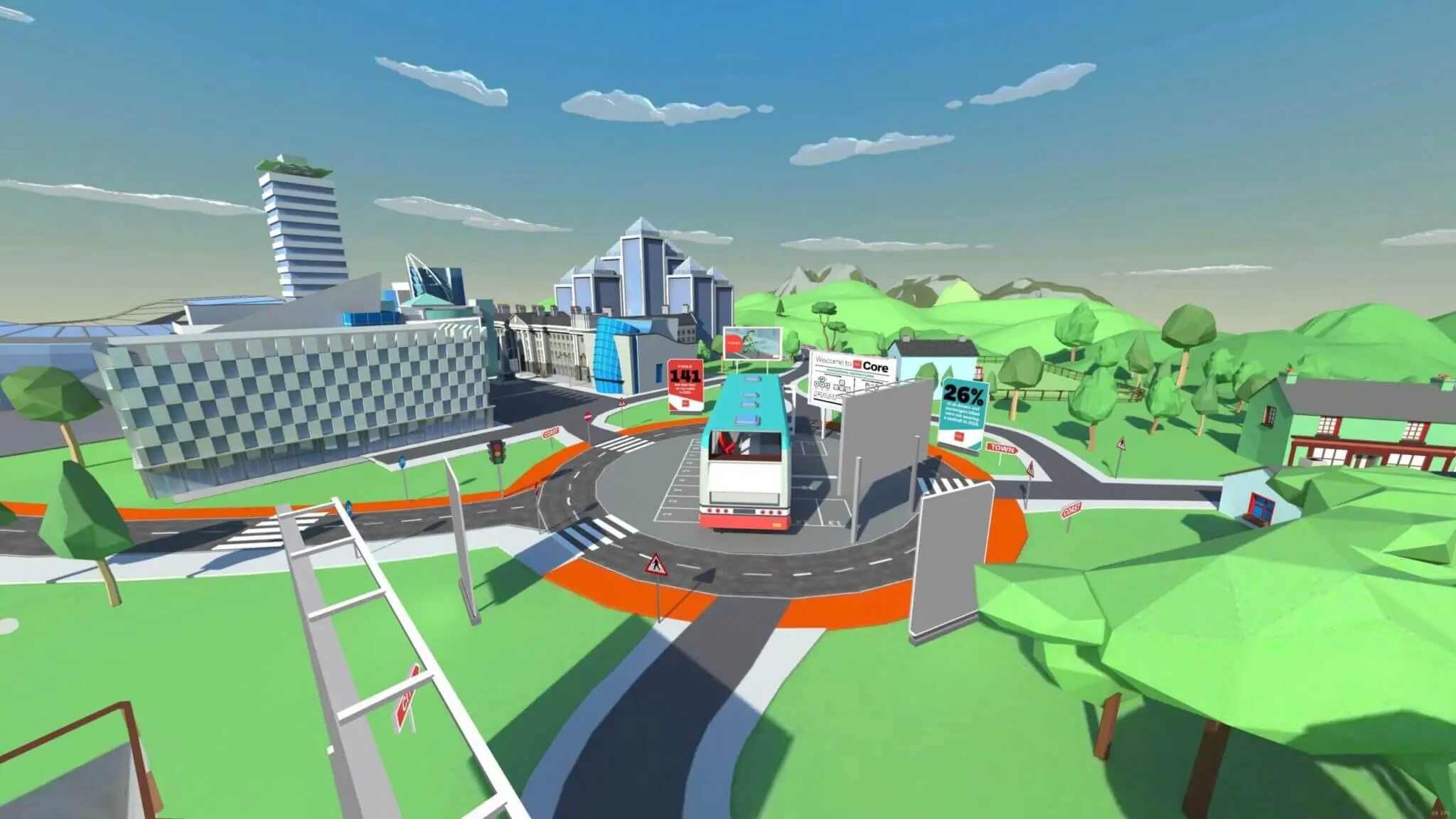
Moving a curriculum into a virtual world is not the same as digitising a worksheet. We worked closely with the RSA's educational team to map the programme's learning objectives to spatial environments that made the content tangible. Road safety concepts that work best through context and consequence, pedestrian crossings, bicycle hazards, passenger behaviour, were given environments where students could observe and interact with scenarios rather than read about them.The navigation model was deliberately simple. Students moved through the world using basic directional controls, with no complex interface to learn before the learning content started. Activity design within each environment was varied: some modules were observational, some required direct interaction, and some presented decision points with consequence feedback.