Making molecular science accessible
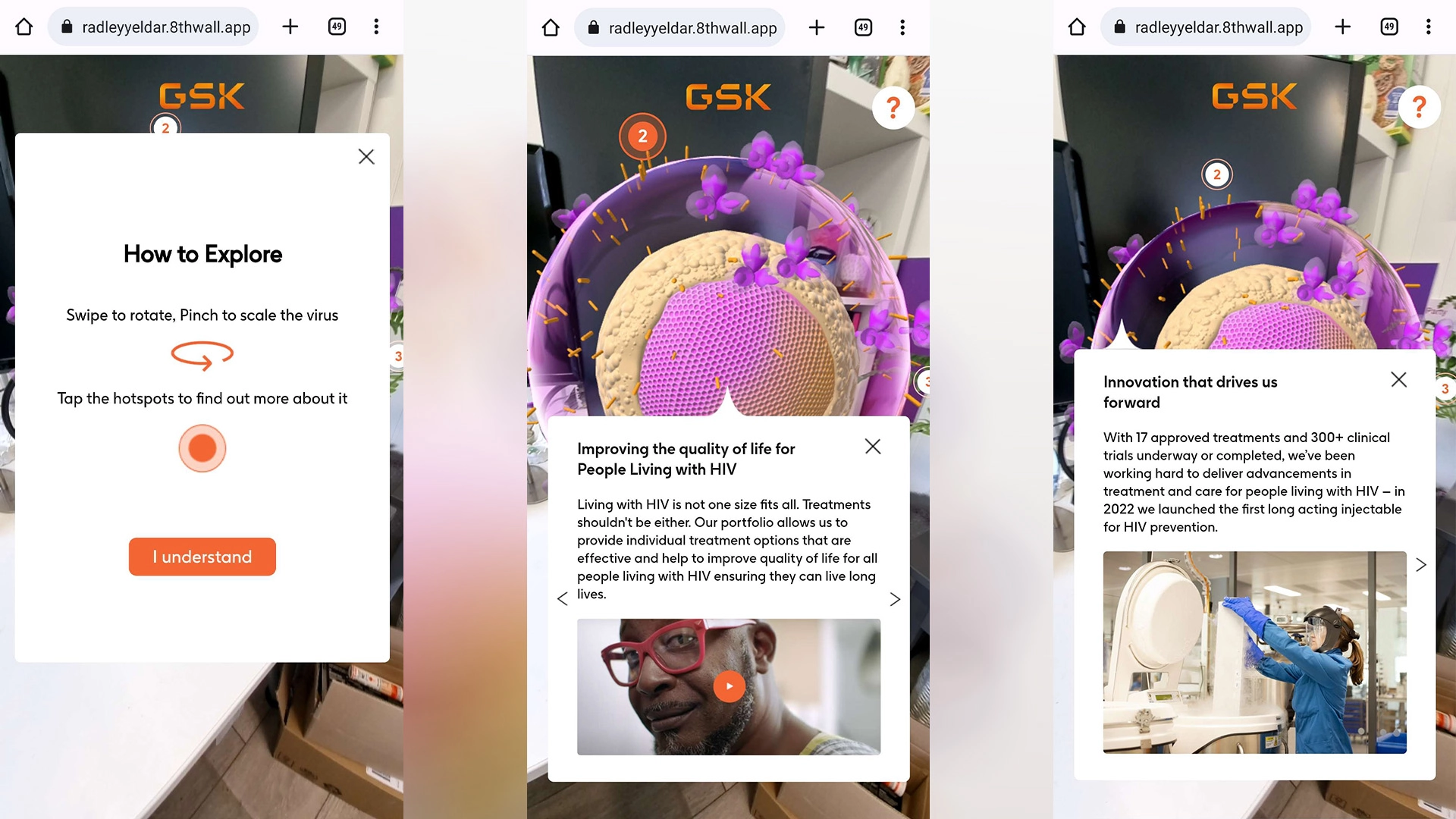
GSK's HIV research programme produces imagery that is scientifically precise and visually extraordinary, but it exists almost entirely within specialist contexts. Working with Radley Yeldar, we built a WebAR prototype that takes GSK's HIV molecular visualisations and puts them in the hands of anyone with a phone, with no app download and no scientific background required. The goal was accessibility: making the complexity available to people who are not trained to read it.Science communication to non-specialist audiences is a design problem as much as a content problem. The AR environment strips away the clinical framing that usually surrounds molecular imagery and replaces it with something more like discovery. The user is not reading about HIV; they are holding a model of it, rotating it, getting close to it. That physical relationship changes what the information feels like.