AGORA’s Real-Time Virtual Tool

// services
Interactive Installation
Experiential Design
Brand Identity
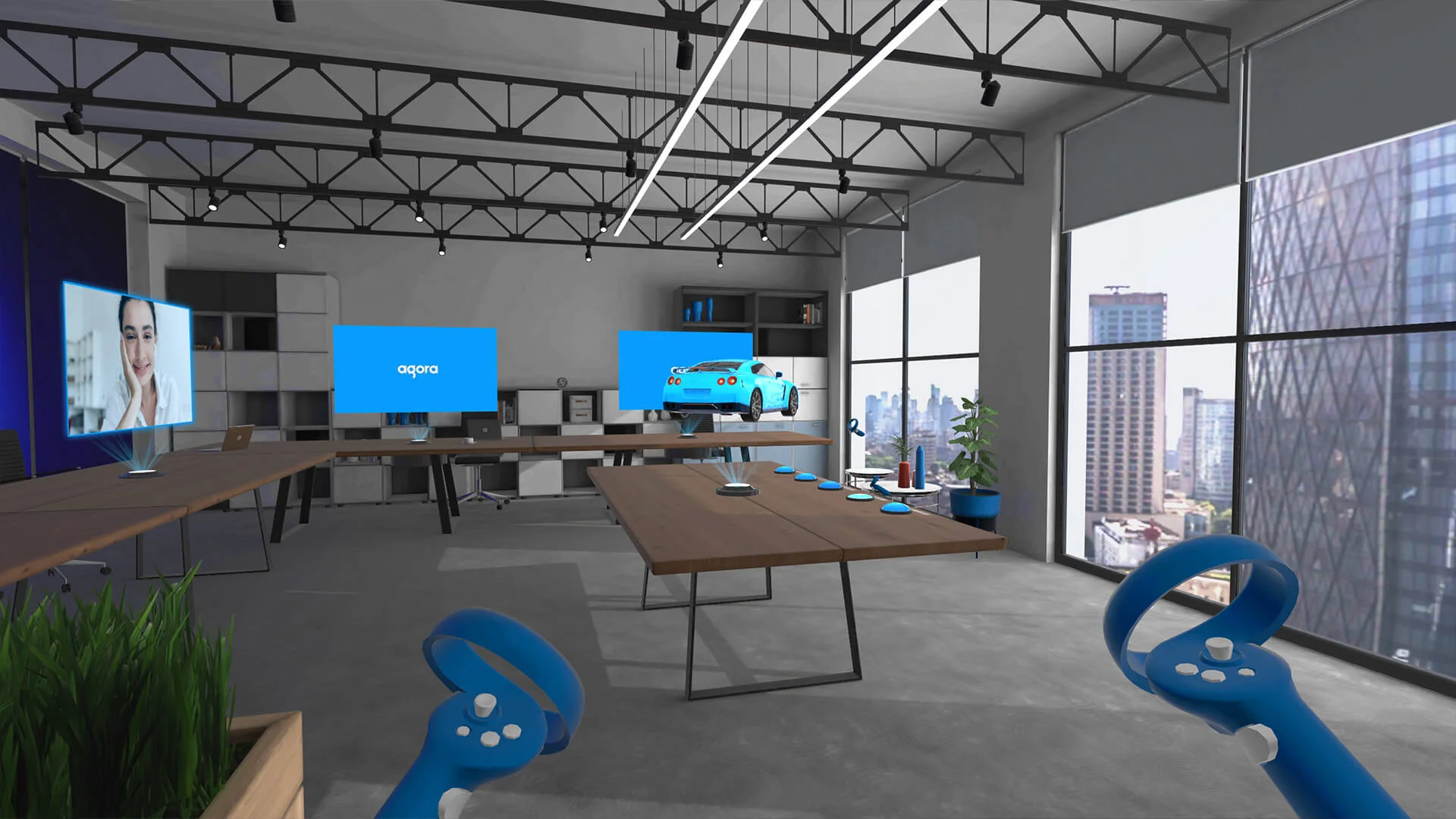
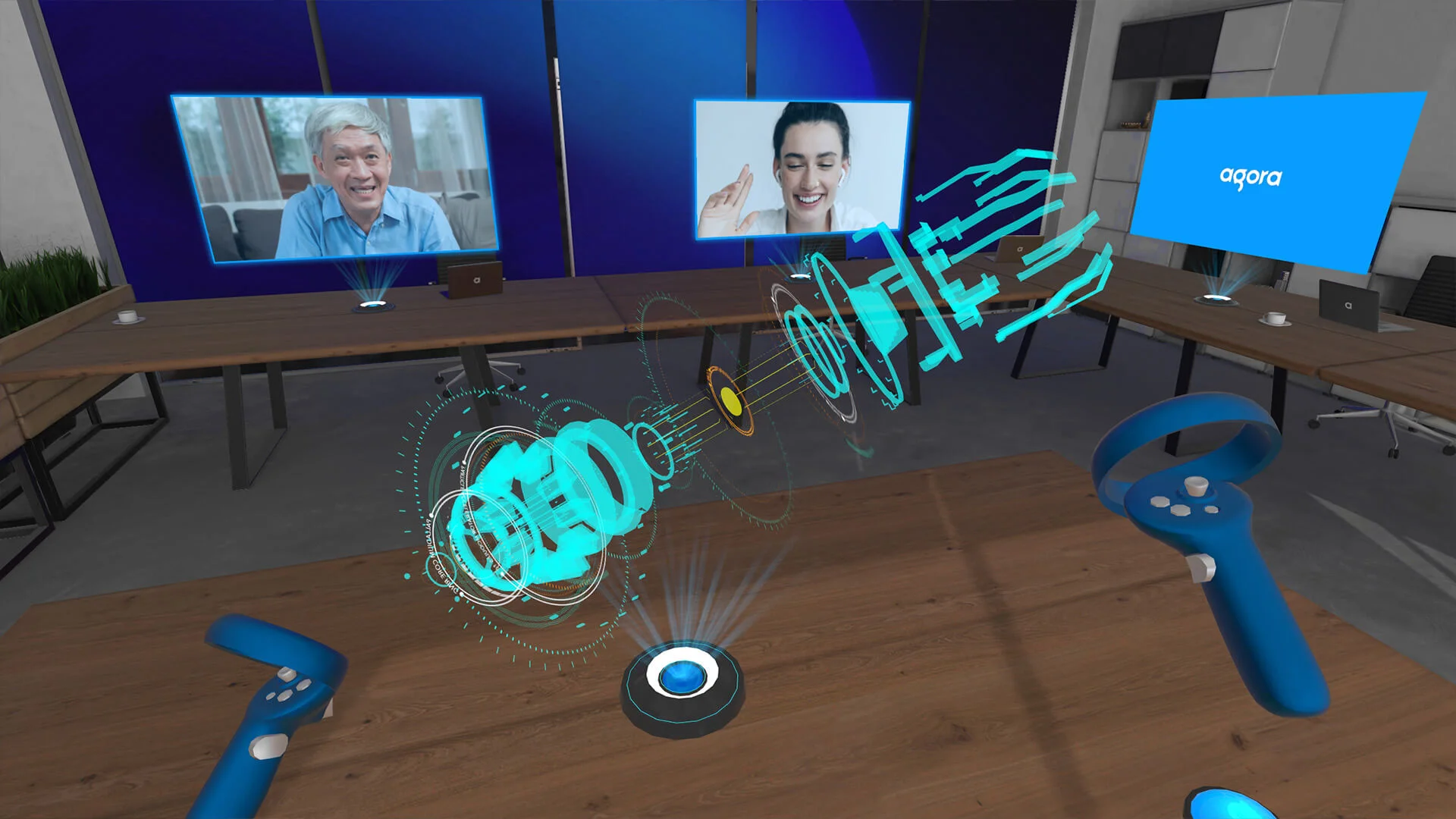
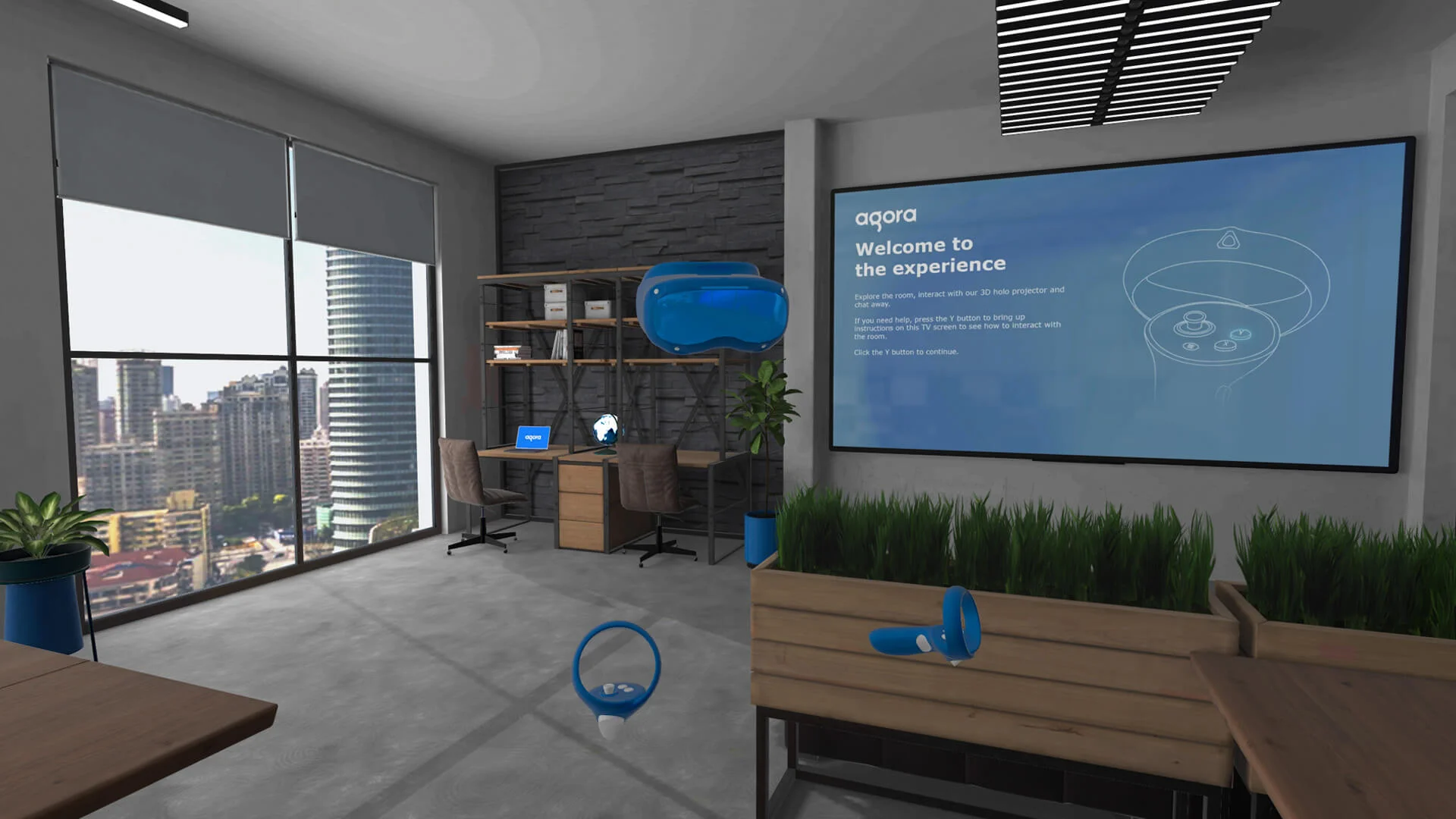
Live cross-platform VR training demo Solarflare built for Agora and HTC Vive at AWE 2021, syncing a shared training scene across desktop and headset in real time.
Real-time sync across every device in the room
At AWE 2021, we built a live cross-platform VR training demo for Agora and HTC Vive that ran simultaneously on a desktop browser and a Vive headset, both sharing the same scene state in real time. The brief was to put Agora's messaging SDK through its paces in front of a live expo audience, which meant no safety net.The demo showed enterprise buyers exactly what the technology can do in a real deployment: a trainer on desktop and a trainee in a headset moving through the same space, seeing each other's actions reflected instantly. We handled the scene architecture, the HTC Vive integration, and the networking layer that kept both views consistent under expo conditions.
Why it worked for the audience
Live demos at enterprise tech expos carry a lot of weight. Buyers come in sceptical and leave decisions on the table if anything misfires. We structured the experience so that the sync behaviour was immediately legible, even to someone watching from ten metres away. One person in the headset, one person on the laptop, both clearly in the same space.Agora's SDK handled the messaging layer; our job was to build something that made that invisible infrastructure visible in a way that felt effortless. The result was a booth piece that held the attention of the expo floor and gave the sales team a concrete, replayable demonstration of sub-100ms sync in a full 3D environment.
What we built and how it held up
The scene was a purpose-built VR training environment designed to work at two levels of fidelity simultaneously. On the headset, full spatial tracking and immersive rendering. On the desktop, a clean third-person view of the same space. Both connected through Agora's real-time messaging API, with our custom sync logic translating headset positional data into desktop-readable state and back.We built in fail states and fallback modes so the demo could absorb the unpredictable network conditions of a large convention centre without dropping. It ran continuously across two full days of the expo with no significant degradation.