Quadient x HUSSEL – Stress Simulator

// services
Interactive Installation
Experiential Design
Motion Design
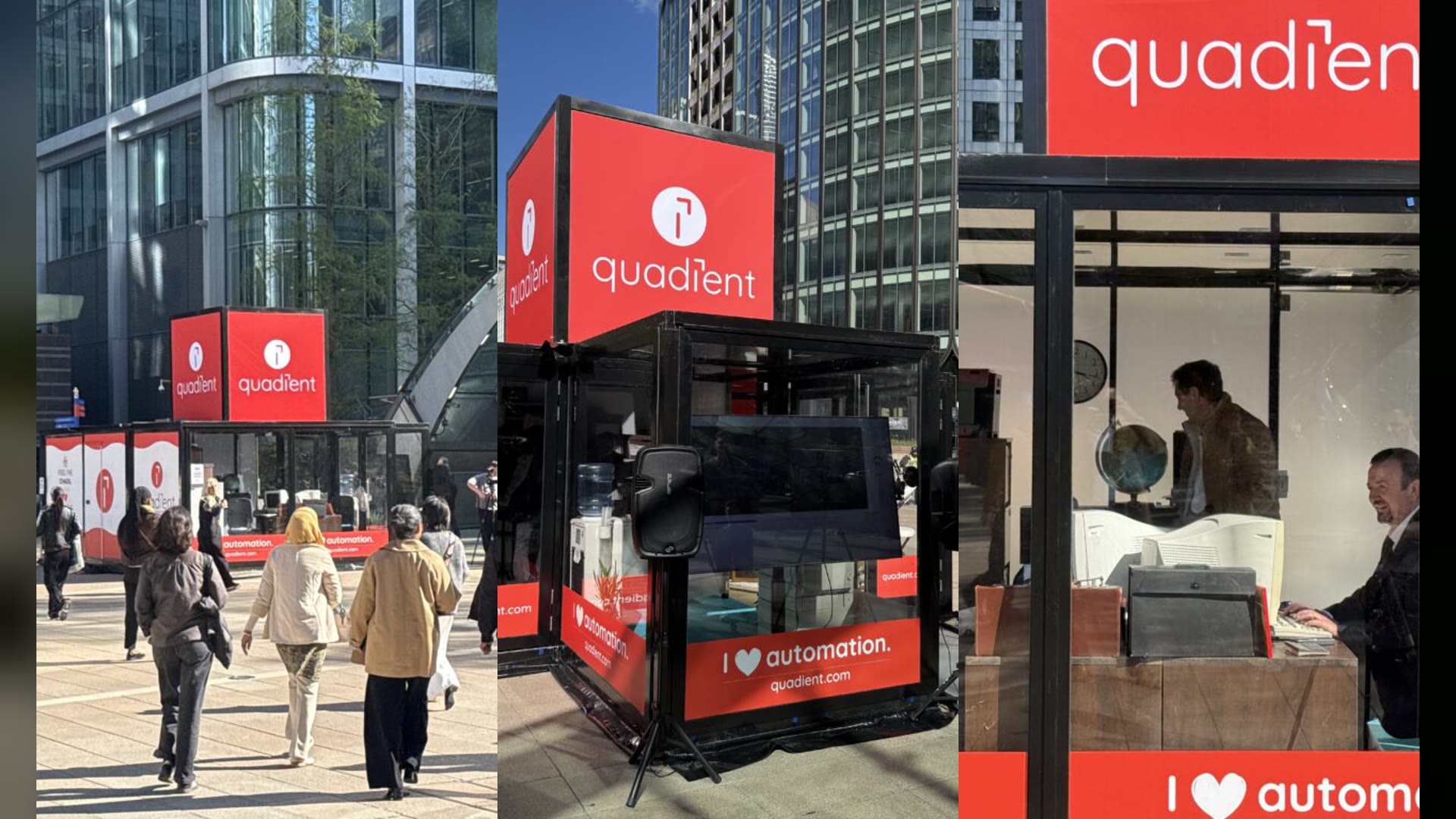
Real-time stress simulator built with HUSSEL for Quadient, placing participants in a chaotic 1990s office with live heart-rate tracking, demonstrating the brand's case against workplace process friction.
The most stressful office in history
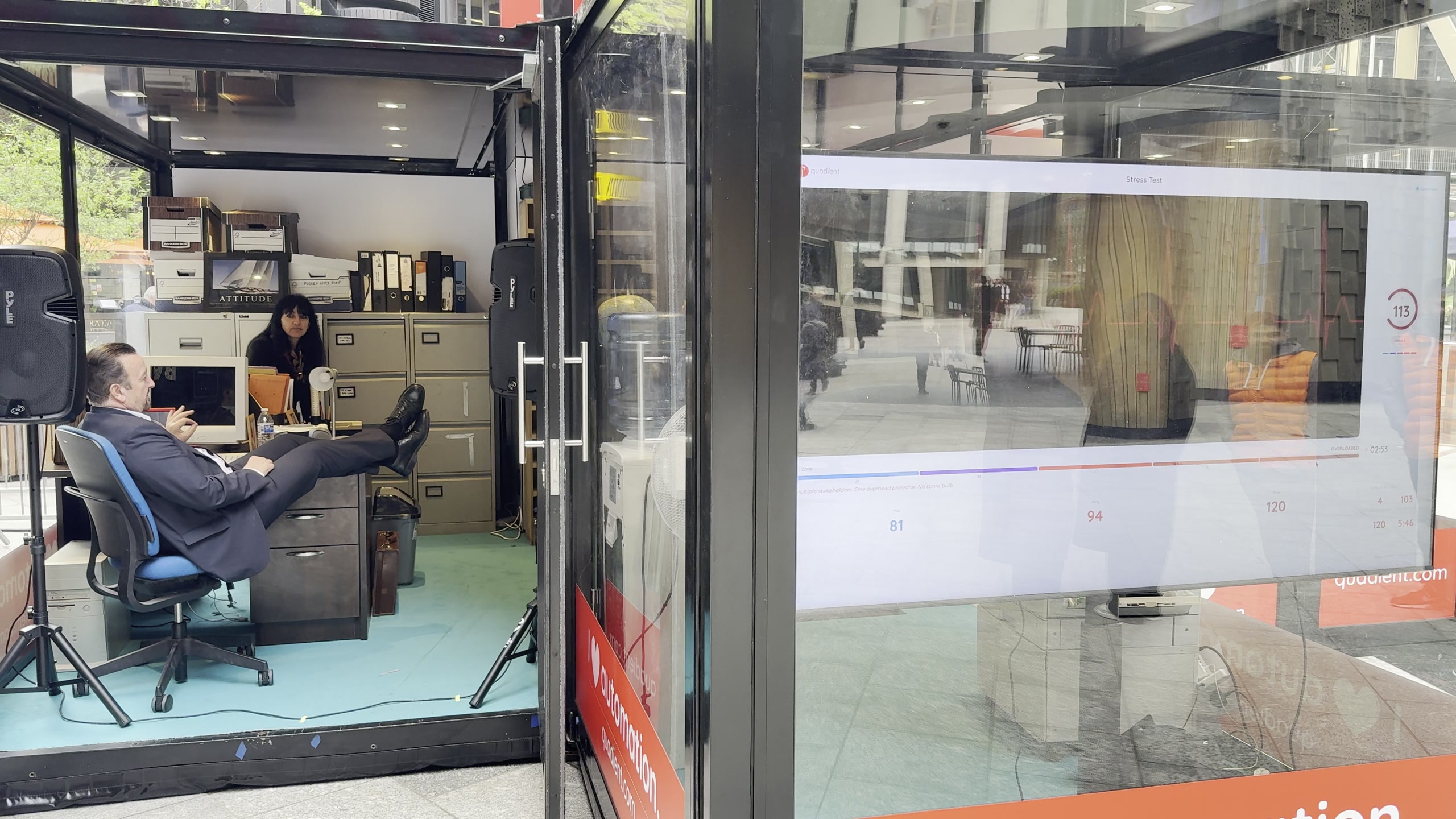
The Quadient x HUSSEL Stress Simulator dropped participants into a reconstruction of a 1990s office environment built specifically to induce stress: phones ringing continuously, managers shouting impossible demands, tasks with no correct answer and no time to complete them. The chaos was deliberate and carefully designed.The experience was built for Quadient, whose core product promise is removing friction and stress from business document processes. To make that promise land viscerally rather than just rationally, we needed to put people inside the problem before showing them the solution. Heart rate data captured via wearable during the simulation was visualised live, so participants could see their own physiological stress response in real time.
Real biometric data as brand proof
Using heart rate as the measurement metric was a deliberate choice. It is a proxy for stress rather than a validated measure of it, and we were clear about that distinction in how the experience was communicated. What it provided was a legible, real-time signal that participants could connect to their own subjective experience of the environment.Calibrating the stress environment itself required careful iteration. Too extreme and it stops being funny; not extreme enough and the physiological response is too mild to register. We tested multiple configurations to find the register that was clearly stressful but still entertaining to watch. The HUSSEL collaboration brought production rigour to the physical environment design, ensuring the 1990s office set read as authentic rather than approximate.
Quadient's message made physical
The commercial logic was tight. Quadient's audience is finance and operations professionals who live with exactly the kind of process friction the simulator exaggerated. Putting them through a heightened version of their own daily experience, and then connecting it to measurable biometric data, made the brand's solution feel relevant in a way that a presentation never could.For events and trade show contexts, the Stress Simulator created exactly the kind of attention and dwell time that a Quadient stand needed. People watched others go through it, queued to try it themselves, and left with a very specific memory of what the brand had shown them.